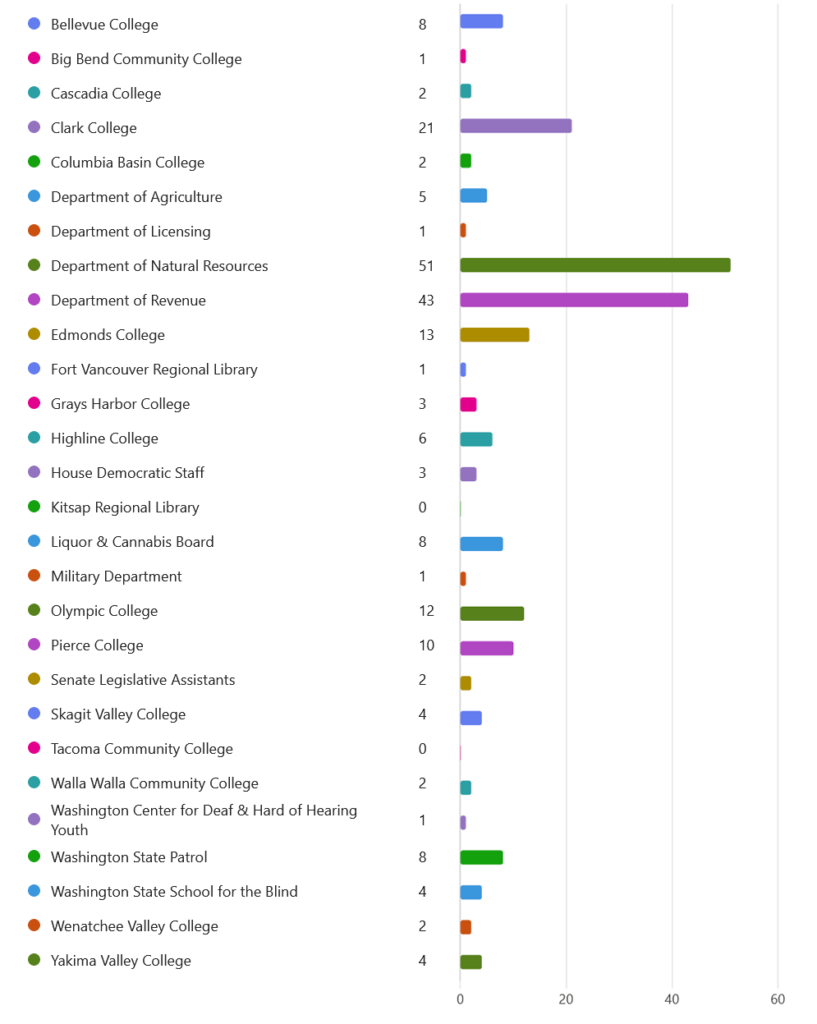


These are the results of the Bargaining Priorities poll conducted earlier this year. We received over 200 responses, reflecting a wide range of perspectives and priorities from across the membership.
Before reviewing the results, a few important notes.
All responses have been manually sanitized to remove personally identifiable information, including dates, employee counts, timelines, locations, and other details that could compromise anonymity. This process was completed by Joey and while it may look like we used a bot, that’s just his “unique” style.
In addition, some priorities raised in the responses are not negotiable within this bargaining process. For example, items such as maximum vacation accrual or sick leave transfer rates are set in Washington state law and cannot be changed through bargaining.
Please keep both of these limitations in mind as you review the results. If you have questions or need clarification, contact your bargaining representative. Download Written Responses
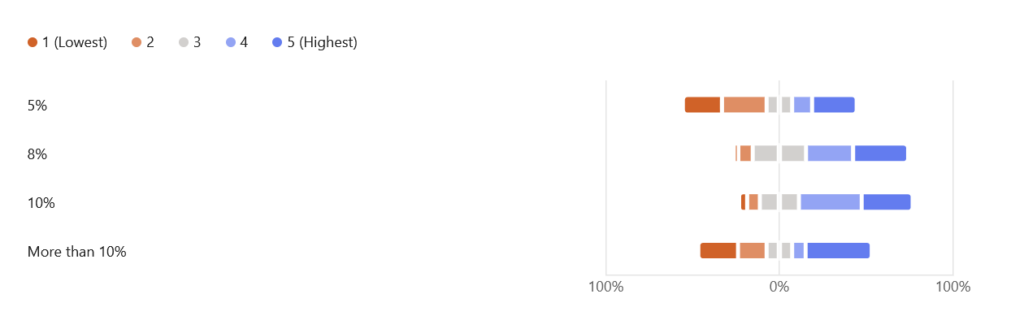
Members were asked to evaluate different cost of living adjustment (COLA) levels over a two-year contract and rank how important each option should be in bargaining.
The results show a clear preference toward higher increases. Both 8% and 10% received the strongest concentration of high-priority rankings, indicating broad alignment around these ranges as acceptable targets. “More than 10%” also received notable support, though responses were more mixed, suggesting less consensus beyond that level.
Lower increases, particularly 5%, were more frequently rated as lower priority. Overall, the results indicate that members expect COLA proposals to be focused on the higher end of the ranges presented.
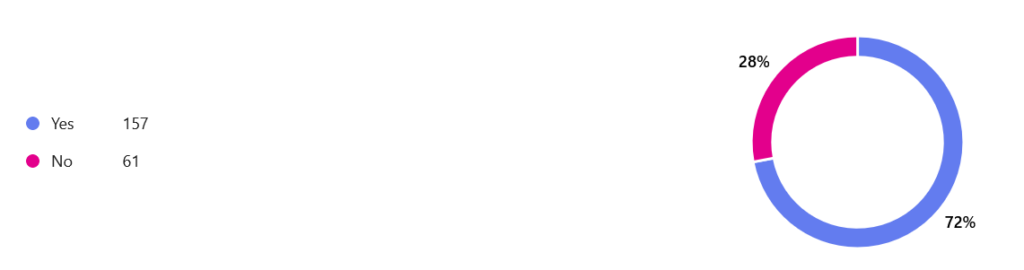
Members were also asked if they believe that their classification should be reviewed for a classification-specific increase and these are the results.
Finally, here is the distribution of participation in this survey by bargaining unit.